18-Year-Old Indian Teen Creates Website Over Weekend, Earns Over $50,000 in 3 Days — SimpleClaw: One-Click Deployment of OpenClaw, MRR Grows from $0 to $7,239 in Just 72 Hours
18-Year-Old Indian Teen Creates Website Over Weekend, Earns Over $50,000 in 3 Days — SimpleClaw: One-Click Deployment of OpenClaw, MRR Grows from $0 to $7,239 in Just 72 Hours

TLDR · Read the Full Article in 30 Seconds
Savio Martin, an 18-year-old high school student from Kerala, India, created a website called SimpleClaw.com over a weekend on February 2, 2026 — allowing ordinary people to deploy the hottest open-source AI framework OpenClaw with one click (GitHub 145,000 stars, exploded globally in 2 weeks).
What was the result? In less than 3 days after launch, MRR (Monthly Recurring Revenue) skyrocketed to $7,239 (approximately 52,000 RMB). The legendary independent developer Pieter Levels (a Dutch expert earning $3 million a year) personally shared and praised it: "Great idea, deploy OpenClaw for non-techies."
This story tells us: doing the right thing at the right time can change your fate in just one weekend.
In the tech world of 2026, a "space lobster" is sweeping the globe. OpenClaw — an AI entity capable of executing tasks autonomously, garnered 145,000 GitHub Stars in just a few weeks, causing Mac Minis to sell out worldwide and driving developers from Silicon Valley to Beijing crazy. But here’s the problem: deploying it is a nightmare for ordinary people. Docker, SSH, VPS, API key configuration… starting from 30 minutes, it’s enough to discourage a tech novice.
So, an 18-year-old Indian teen stepped up. He said, "I’ll help you out, 1 minute, one-click deployment."
I. Who: Who Are These People?
Protagonist: Savio Martin (@saviomartin7)
- Age: 18 years old (born in 2007)
- Location: Kochi, Kerala, India
- Identity: 12th-grade high school student (yes, still in school)
- Position: Currently working at Fold Ventures
- Title: Product Hunt 2021 Best Maker (won at age 14)
- Tech Stack: React, Node.js, TypeScript, full-stack development
- GitHub: 2K+ followers, has appeared on YC Hacker News and Product Hunt homepage
He has also worked on several projects: Slickr (cover image generator), Code House (developer quick reference manual, 968 Stars), Iconify (AI icon generator) — all following the strategy of "identifying pain points → rapid launch → winning users."
"Full-stack web developer with a passion for beautiful and functional interfaces."
"Full-stack developer, passionate about beautiful and practical interface design." — Savio's GitHub profile
Referrer: Pieter Levels (@levelsio)
If you follow the independent developer community, you must be familiar with this name. Pieter Levels, a "godfather" figure among global independent developers, a Dutchman, and a pioneer of digital nomadism.
Pieter Levels' Achievements:
- Annual Income: $3M+ (over 21 million RMB), zero employees, pure profit margin over 90%+
- Representative Works: Nomad List (digital nomad information site), Remote OK (largest remote work platform), Photo AI- Quote: Launched the "12 startups in 12 months" challenge in 2014 - 12 products in 12 months
- Tech Stack: PHP + jQuery + SQLite (Yes, it's that simple, without any trendy frameworks)
- Recent Hit: fly.pieter.com (a flight simulator game) went from $0 to $1M ARR in 17 days
"Great idea, deploy OpenClaw for non-techies. Great work by @saviomartin7 who deserves a follow for shipping this fast!!"
"Great idea, help non-techies deploy OpenClaw. @saviomartin7 did a great job, the speed of this release is worth following!"
Behind the Scenes Figure: Peter Steinberger (Founder of OpenClaw)
SimpleClaw exists because of OpenClaw. The creator of OpenClaw is a similarly legendary figure - Peter Steinberger, an Austrian software engineer.
Peter Steinberger's Resume:
- Entrepreneurial Experience: Founded PSPDFKit (PDF development framework) in 2011, bootstrapped to global recognition
- Exit: Retired after receiving a €100 million (approximately 780 million RMB) strategic investment from Insight Partners in 2021
- Experience: Nearly 20 years of iOS development experience (Swift/Objective-C veteran)
- Transformation: After returning, fully shifted to TypeScript + AI-assisted development, self-proclaimed "vibe coding"
- Works: OpenClaw (originally named Clawdbot → Moltbot → OpenClaw, renamed twice due to trademark complaints from Anthropic)
"I ship code I don't read."
"I release code that I haven't even read myself." - Peter Steinberger
Observer: Marc Lou (@marclou)
Marc Lou, another "internet celebrity" in the independent developer circle, earns $47K a month and runs the "Just Ship It" independent developer community with over 42,000 subscribers. His famous quote is: "I was fired everywhere so I hired myself."
He was the first to publicly summarize the "OpenClaw Wrapper gold rush":
"It's OpenClaw wrappers time! @saviomartin7 doubled his revenue in 24 hours. My feed is full of XYZClaw launches. Entrepreneurship is really like surfing."
"The era of OpenClaw wrappers has arrived! @saviomartin7's revenue doubled in 24 hours. My timeline is filled with various XYZClaw. Entrepreneurship really is like surfing."
II. What: What products were made?
First, let's talk about OpenClaw: The most explosive AI open-source project of 2026
To understand the business logic of SimpleClaw, one must first clarify what OpenClaw actually is.
In simple terms, OpenClaw is an AI entity that can truly help you get work done. Note, it’s not ChatGPT that "helps you chat," but a digital employee that can autonomously execute tasks - helping you check emails, schedule appointments, modify code, book flights, control smart home devices, and even write extension plugins to enhance itself.
How popular is OpenClaw?
- GitHub Stars: 145,000+ (one of the fastest-growing open-source projects in history)- Within 72 hours: From 9,000 stars to 60,000 stars
- Website visits: Over 2 million unique visitors in the first week
- Discord: Over 60,000 members
- Byproduct: Moltbook (the world's first AI social network) attracted 37,000 AI agents in one day
"It is very personal, it's very easy, and you can get both very practical and very silly with it."
"It is very personalized, very simple, and you can use it for serious things or for particularly silly things." — IBM Senior Researcher Marina Danilevsky
"TLDR: open source built a better version of Siri that Apple ($3.6 trillion company) was sleeping on for years."
"In short: the open source community created a version much better than Siri, while Apple, this $3.6 trillion company, has been sleeping on Siri for years."
The Fatal Barrier of OpenClaw: Deployment is Too Difficult!
Peter Steinberger repeatedly emphasizes: "not yet intended for non-technical users."
You need: to purchase/configure a VPS server, install Docker, configure an SSH tunnel, apply for an API key, set environment variables, connect to a messaging platform... at least 30 minutes or more, and it could fail at any moment.
For ordinary users, this is an insurmountable technical barrier.
Then, SimpleClaw Arrived
Savio saw this huge gap — 145,000 people starred OpenClaw, but the number of people who could successfully deploy and use it was probably less than one-tenth.
SimpleClaw in one sentence:
"Deploy OpenClaw in under 1 minute. Avoid all technical complexity and one-click deploy your own 24/7 active OpenClaw instance."
"Deploy OpenClaw in under 1 minute. Skip all technical complexities and one-click deploy your own 24/7 active OpenClaw instance."
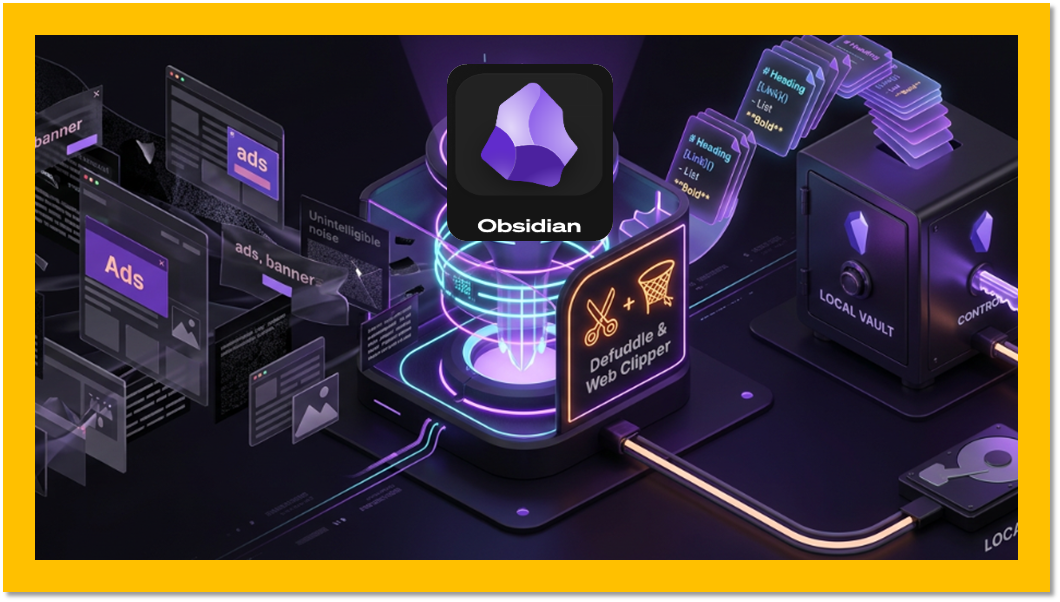
It essentially acts as a "foolproof package": automating all the server configuration, environment setup, model selection, and messaging platform integration that originally required manual operation. Users just need to click a few times, choose the AI model they want to use (Claude Opus 4.5, GPT-5.2, Gemini 3 Flash, etc.), select a messaging platform (Telegram, Discord, WhatsApp), and then — done.
When & Where: When and where did it happen?
Timeline and Outbreak Path
- November 2025: Peter Steinberger released the predecessor of OpenClaw under the name "Clawdbot", initially just a WhatsApp message relay tool
- January 27, 2026: Renamed to "Moltbot" due to a trademark complaint from Anthropic (meaning lobster molting)
- January 30, 2026: Renamed again to "OpenClaw", and on the same day GitHub Stars surpassed 108,310
- End of January 2026: OpenClaw fully exploded: within 72 hours it surged from 9K stars to 60K stars, Moltbook AI social network went live, Mac Mini sold out worldwide
- February 2, 2026 (Sunday): Savio Martin tweeted: "weekend side project: simpleclaw.com" — SimpleClaw was born.- February 3, 2026: Less than 24 hours after launch, MRR surpassed $2,000
- February 4, 2026: Savio tweeted to celebrate: "such a killer launch for SimpleClaw", earning $4,475 in 14 hours
- February 5, 2026: Marc Lou tweeted: "OpenClaw wrappers time!" — SimpleClaw's revenue doubled in 24 hours
- February 6, 2026: Savio shared a TrustMRR screenshot: $7,239 MRR · Pieter Levels personally retweeted · The tweet received 156,000 views
Four, Why: Why was it successful?
The success of SimpleClaw ultimately comes down to three "just right" overlaps:
Reason One: Timing — Riding a once-in-a-century "big wave"
OpenClaw is the fastest-growing open-source project at the beginning of 2026, without exception. 145,000 Stars, 2 million weekly visitors, global Mac Mini sold out — this is a huge demand surge. Savio did not create the demand, but stood at the peak of the wave when the demand was most furious.
Reason Two: Location — Precisely hitting the "capability gap"
145,000 people starred OpenClaw, but less than 10% could successfully deploy it. The huge "capability gap" (wanting to vs being able to) is the business of SimpleClaw. TrustMRR states clearly: "There is really good desire in the market for setting up OpenClaw fast, and zero direct competitor as good or easy as SimpleClaw."
Reason Three: People — The "fearless speed" of an 18-year-old
Savio's advantage is not having the strongest technology, but the fastest speed. He worked on it over the weekend, while others were still thinking, "I want to make one too", he was already online and making money. There is a saying in the indie developer community: "Ship fast or die", and Savio has taken this saying to the extreme. Pieter Levels' praise actually speaks to this point: "who deserves a follow for shipping this fast!!"
Five, How: How did it happen?
1) Product Strategy: Extreme simplification, cutting out all complexity
The core design philosophy of SimpleClaw can be summed up in one word: reduce.
What does SimpleClaw save you from?
- ❌ No need to buy your own server → ✅ Pre-configured cloud server
- ❌ No need to install Docker → ✅ Environment is already packaged
- ❌ No need to configure SSH → ✅ Web interface operation
- ❌ No need to mess with API keys → ✅ Dropdown menu to select model
- ❌ No need to learn command line → ✅ Click a button to complete
2) Marketing Strategy: Twitter virality + endorsement from influencers
What is Savio's marketing budget? Zero.
He did a few things right:
- Product as promotion: The name "SimpleClaw" makes it clear what it is — Simple + OpenClaw
- Public building: Tweeting every milestone, data transparency (using TrustMRR to disclose revenue)
- Influencer self-promotion: Pieter Levels (1.1 million followers) actively retweeted and liked, directly igniting interest
- Leveraging trends: OpenClaw itself is a hot topic, and any content related to it carries built-in traffic
3) Business Model: Hosting-as-a-ServiceSimpleClaw's business model is extremely clear: it takes on the technical complexity for users and charges hosting fees.
Users pay a monthly fee to SimpleClaw → SimpleClaw manages your servers, runtime environment, and security updates → You only need to chat with your AI assistant like sending a WeChat message.
Six, How Much: How Much Money Did It Make?
- 14 hours after launch: $4,475 in revenue (confirmed by Marc Lou)
- 24 hours after launch: MRR surpassed $2,000 (TrustMRR data)
- 48 hours after launch: Revenue doubled (Marc Lou: doubled revenue in 24h)
- 72 hours after launch: MRR reached $7,239 (approximately ¥52,120)
- 30-day total: $7,852 (as shown by TrustMRR)
Interestingly, Savio later launched a $SIMPLECLAW token on the Solana chain (through pump.fun), with a market cap that once surged to $264K, later falling back to around $50K-80K. This move sparked considerable controversy—some said it was a clever fundraising tactic, while others claimed it was a sign of a "rug pull."
"I'm raising funds to continue development: $SIMPLECLAW"
"I am raising funds to continue development: $SIMPLECLAW"—Savio's original words.
Regardless of how you view this token operation, in terms of SaaS revenue: an 18-year-old high school student, one weekend, three days, with a monthly income of 50,000 RMB. This efficiency is something many adult entrepreneurs can only dream of.
Seven, Lessons Learned: What Can Ordinary People Replicate?
1. "Wrapper" is not a derogatory term, but a business model.
Many people look down on "wrappers"—"Aren't you just putting on a layer of shell?" But SimpleClaw proves that lowering the barrier to use is itself a huge value. Stripe is a payment wrapper, Vercel is a deployment wrapper, Heroku is a server wrapper—the most profitable companies are often those that help others "simplify complexity."
2. Speed > Perfection, first-mover advantage is invaluable.
Marc Lou observed that after SimpleClaw's release, there were numerous imitators with names like "XYZClaw". But Savio had already captured the largest wave of traffic and the endorsement of Pieter Levels—these are things that later entrants cannot replicate.
"If you're in the right place at the right time, you'll have the time of your life."
"If you happen to be in the right place at the right time, you will experience the most exciting moments of your life."—Marc Lou
3. Look for the gap of "145,000 people want it but can't manage it."
This is the most valuable mindset—not "I want to create a brand new demand," but "there is already massive demand, but there is an obstacle in the middle, and I will help them cross it." This model can be replicated in any field: hosting services for a popular open-source tool, simplified packaging for a complex API, or a beginner's version of a professional tool...
4. Age is not a barrier, speed is.
Savio is an 18-year-old high school student, Peter Steinberger is a retired billionaire, and Pieter Levels is a 37-year-old digital nomad—there is nearly a 20-year age gap, but they share one common trait: they take action when they see an opportunity, not waiting until they are "ready" to start.
5. Risk Warning: Surfing can also lead to capsizing.
SimpleClaw's model heavily relies on the popularity of OpenClaw. If OpenClaw is replaced by better competitors or user enthusiasm wanes, SimpleClaw's revenue could quickly decline.In addition, OpenClaw itself has serious security vulnerabilities: CVE-2026-25253 remote code execution vulnerability (CVSS score of 8.8), risks of malicious skill plugins, prompt injection attacks, etc. Users should fully understand these risks when using any OpenClaw deployment services.
8. Easter Egg: The Crazy Side of the OpenClaw Ecosystem
A rather crazy ecosystem has formed around OpenClaw, which is worth mentioning:
- Moltbook: A social network that only allows AI Agents to use, which had 37,000 AI registrations on its first day. It has been observed that AIs have created a "religion" among themselves and spread it through executable shell scripts (yes, AI evangelism).
- Mac Mini Shortage: Because OpenClaw requires a computer to be always online, many people are buying Mac Minis as dedicated AI servers—leading to a global shortage of Mac Minis.
- Name Change Trilogy: Clawdbot (in homage to Claude) → Moltbot (due to a trademark complaint from Anthropic) → OpenClaw (because Moltbot "sounds too awkward"). Founder Peter Steinberger commented on his naming ability: 🦞.
- China is Following Suit: Alibaba, Tencent, and ByteDance's cloud services are all integrating with OpenClaw, and the DeepSeek model has also been adapted. Chinese developers are connecting OpenClaw with Chinese messaging platforms to create a local version of AI assistants.
- Peter's Moroccan Story: At a friend's birthday party, he sent a screenshot of a tweet about a bug to OpenClaw via WhatsApp. The AI understood the tweet, automatically checked out the code repository, fixed the bug, submitted the code, and replied on Twitter saying it was fixed. He didn't touch a line of code during the entire process.
"2026 is already the year of personal agents."
"2026, already the year of personal AI agents." —@chrisdietr
Final Thoughts
The story of Savio Martin is not primarily about "an 18-year-old boy earning 50,000 dollars."
The core is: when a huge wave comes, do you choose to stand on the shore and watch, or do you grab your surfboard and run into the sea?