Codex's Triple Growth: The AI Programming Tool War
OpenAI's official data shows that Codex's weekly active users have tripled since the beginning of 2026. This is not a random number—it marks the AI programming tool market's transition from the "toy era" to the "platform war" stage.
Data Speaks
Sam Altman confirmed on X that Codex's standalone app exceeded 1 million downloads in its first week of release. After the GPT-5.3-Codex model went live, weekly usage increased by 60%. By mid-February 2026, Codex had over 1 million weekly active users.
What is the background to these numbers?
- February 2: Codex macOS app released
- February 5: GPT-5.3-Codex model goes live
- February 9: Codex advertises during the Super Bowl halftime show
This is not a coincidence. This is a carefully planned platform offensive.
The Emergence of a Bipolar Pattern
The hottest discussion on X is not "Is AI programming easy to use", but "Codex or Claude Code".
"Codex is way better than Claude Code" / "Claude Code is better. Have you even shipped anything?" / "No, have you?" / "No"
This tweet was widely retweeted because it accurately captures the current market's awkwardness: Users are arguing about which is better, but no one is really satisfied.
From a platform strategy perspective, there are two key observations:
First, there are clear differences in product positioning.
Claude Code is positioned for "rapid iteration"—suitable for brainstorming and quick tasks. Codex is positioned for "deep understanding"—read the code before acting.
This represents two different philosophies: speed vs. completeness.
Second, pricing strategies determine market boundaries.
For heavy users, Codex has a clear cost-performance advantage. This means that OpenAI is using pricing strategies to lock in professional developers—the most valuable core user group in this market.
Strategic Intent of OpenClaw Acquisition
In early February, OpenAI acquired the open-source programming tool OpenClaw. The discussion on X focused on "how much did it cost" and "will the founder leave", but the real strategic significance was ignored.
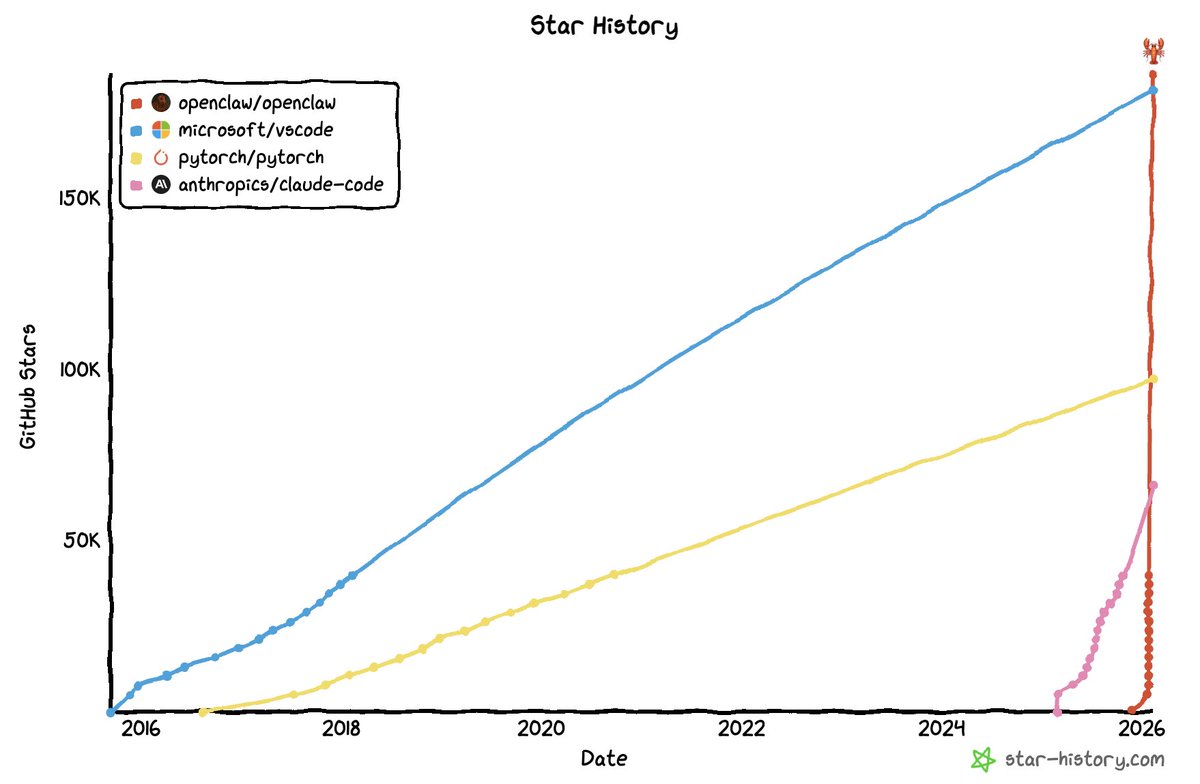
OpenClaw has more stars on GitHub than VS Code, and three times as many as Claude Code. More importantly, it is an open-source platform.
By acquiring OpenClaw, OpenAI gets three things:
- Trust of the open-source community—which is becoming increasingly scarce in the AI field
- Cross-platform capabilities—OpenClaw supports Windows, while the official Codex app is currently only available for macOS
- Talent—the founder is a thought leader in the independent developer community
From a platform strategy perspective, this is a key step for OpenAI in building a "developer aggregation platform". Controlling the tool layer allows you to control the user entry point.
Windows: A Neglected Growth Bottleneck
What is the most consistent complaint on X?
"Why do you guys always release on MacOS first, it really makes it hard for Windows users to want to commit to giving your new products a chance."
"You know what hasn't tripled, Sam? Codex users on Windows."
This is not a small problem. Windows users account for more than 60% of developers worldwide. OpenAI's macOS-first strategy may have improved brand tone in the short term, but in the long term, it is a huge growth bottleneck.
The good news is that third-party tools like Craft Agents have filled this gap. But relying on third parties means that the user experience is uncontrollable. If OpenAI wants to truly win this war, the Windows app must go live as soon as possible.
What Are Users Actually Using?
Greg Brockman's tweet may be the most accurate summary of Codex's value:
"codex is so good at the toil — fixing merge conflicts, getting CI to green, rewriting between languages — it raises the ambition of what i even consider building"

The key word is "toil"—those repetitive, tedious, but necessary tasks. The real value of AI programming tools is not to replace programmers, but to eliminate toil and unleash creativity.
This is the decisive factor in the platform war: whoever can better eliminate toil will win developers' time and loyalty.
The Bottom Line
Codex's triple growth is not luck. It is the result of OpenAI's carefully planned platform strategy: application first, model iteration, acquisition integration, and pricing lock-in.
But the war has just begun. Claude Code is iterating rapidly, Cursor is waiting to integrate GPT-5.3-Codex, and the open-source community is watching the fate of OpenClaw.
For developers, this is the best of times—competition from multiple platforms means better products and lower costs. But it is also the time when you need to stay awake the most: Choosing a platform means choosing a technology stack and business model.
Who to choose? It depends on your needs. But remember one thing: in this war, the only thing users can do is maintain portability.