The Next Cloud Computing War: Decentralization Challenges Trillion-Dollar Giants
In 2026, cloud computing is undergoing a structural transformation.
Trillion-Dollar Backlog
Amazon, Google, and Microsoft disclosed astonishing figures in their latest financial reports: the three companies collectively have a $1.1 trillion backlog of cloud computing revenue. Microsoft alone accounts for $625 billion of this.
This isn't a sign of weak demand, but rather demand that is too strong—capacity can't keep up with the rate of signing contracts.

Energy Costs
Someone on X pointed out a frequently overlooked fact:
"Data centers account for approximately 7% of the total electricity demand in the United States" — @Crypto_TownHall
Cloud computing is not a free lunch. Every API call, every model inference, has real energy consumption costs behind it. As AI training demands grow exponentially, this 7% will continue to climb.
Decentralized Challengers
The centralized model of traditional cloud computing is being challenged:
Kova Network
"Kova is redefining cloud computing by making idle GPUs and CPUs accessible through a decentralized marketplace. Billed by the second, sharded usage, blockchain payments." — @Oliverr100x
Akash
"The Airbnb of cloud computing. A decentralized compute marketplace that's 85% cheaper than AWS. Reverse auction system—service providers bid for your business." — @_hightek
AethirCloud
"While the giants are still sleeping, AethirCloud is reshaping how GPU clouds operate. Truly distributed GPU compute, open, fair, and borderless." — @Frekymike
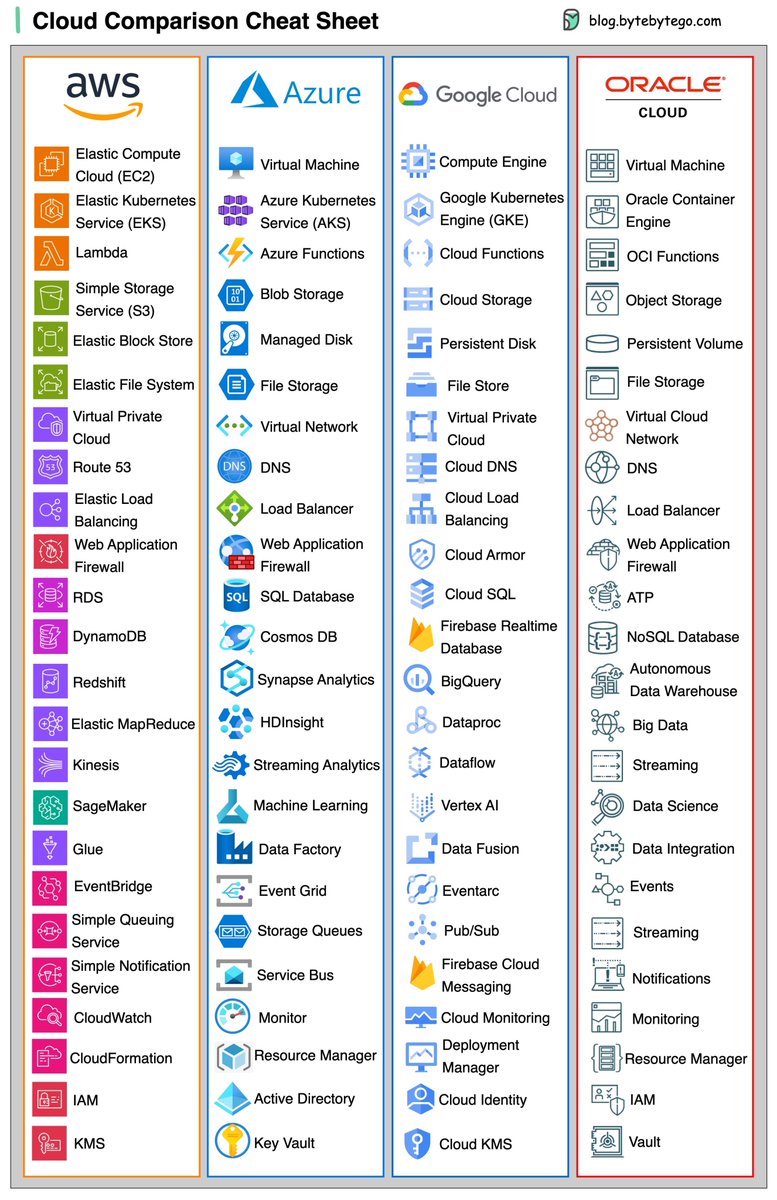
The common thread among these projects: attempting to break the oligopoly of AWS, Azure, and GCP by using decentralized architectures to reduce costs.
Confidential Computing
Someone on X pointed out another trend:
"Traditional cloud scales efficiently but forces users to trust service providers with raw data. Confidential computing completely removes this trust assumption—data remains encrypted even during processing." — @Penggking
This is an extension of "zero trust" at the infrastructure level. When AI needs to process sensitive data, confidential computing becomes a necessity.
India's 21-Year Tax Exemption
On the tax policy front, India has played a trump card:
"Norway and the Netherlands want to tax unrealized gains, but the Indian government is offering a sweet deal: 21 years of zero tax on cloud computing profits—all AI revenue is tax-free for any company building hyperscale data centers locally." — @yoganvp
This is a global battle for computing power. India is using tax policies to attract infrastructure construction, just as it used tax incentives to attract software outsourcing in the 1990s.
Edge vs. Cloud
There's a clear comparison on X:
"In cloud computing, computation and data storage occur in a centralized location, with cloud service providers managing resources. Edge computing pushes computation to the data source—reducing latency, lowering bandwidth costs, and improving privacy." — @NikkiSiapno
This isn't "edge replacing cloud," but rather a hybrid architecture of "edge + cloud." AI inference at the edge, training in the cloud.
The Return of Local Agents
An interesting reversal:
"Running as a local Agent for a few months—the power shift is real. No cloud dependency, full system access, persistent memory across sessions. Your AI becomes part of the computing environment, not a service you access." — @LFuckingG
When AI Agents can run locally, the narrative of "everything to the cloud" begins to falter.
Every Computing Era Has a Control Plane
Someone on X summarized it well:
"Every major computing era has created a new control plane: Mainframe → Operating System, Internet → Routing Protocols, Cloud → Orchestration Layer. AI will create a governance infrastructure. Not because of the security narrative, but because uncontrolled systems cannot be deployed at scale." — @asymmetricmind
The next decade of cloud computing isn't about "more cloud," but about "different types of cloud"—decentralized, confidential, edge-native.
The trillion-dollar backlog shows that there's no problem with demand. The question is: who can meet these demands at a lower cost and with greater trust?
Decentralized cloud provides an answer. But whether the answer can be realized depends on execution.