Vibe Coding and One-Person Company (OPC) are a Perfect Match
Vibe Coding and One-Person Company (OPC) are a Perfect Match
Hello everyone, I'm Lugong.
The concepts of One Person Company (OPC) and super-individual have been very popular on X since about last year. As the capabilities of large models become stronger and stronger, more and more people are starting to practice the concepts of one-person companies and super-individuals, consciously or unconsciously.
Every night before going to bed, I plan the approximate work plan for the next day, record it item by item as a to-do list, and then allocate it to various AIs to complete the next morning. For example, I simultaneously open multiple Claude Code and Codex to perform specific development tasks, open ChatGPT and Gemini separately to perform the same DeepResearch research, let NotebookLM disassemble a professional video of a Youtube blogger, check OpenClaw's work report yesterday, and so on.
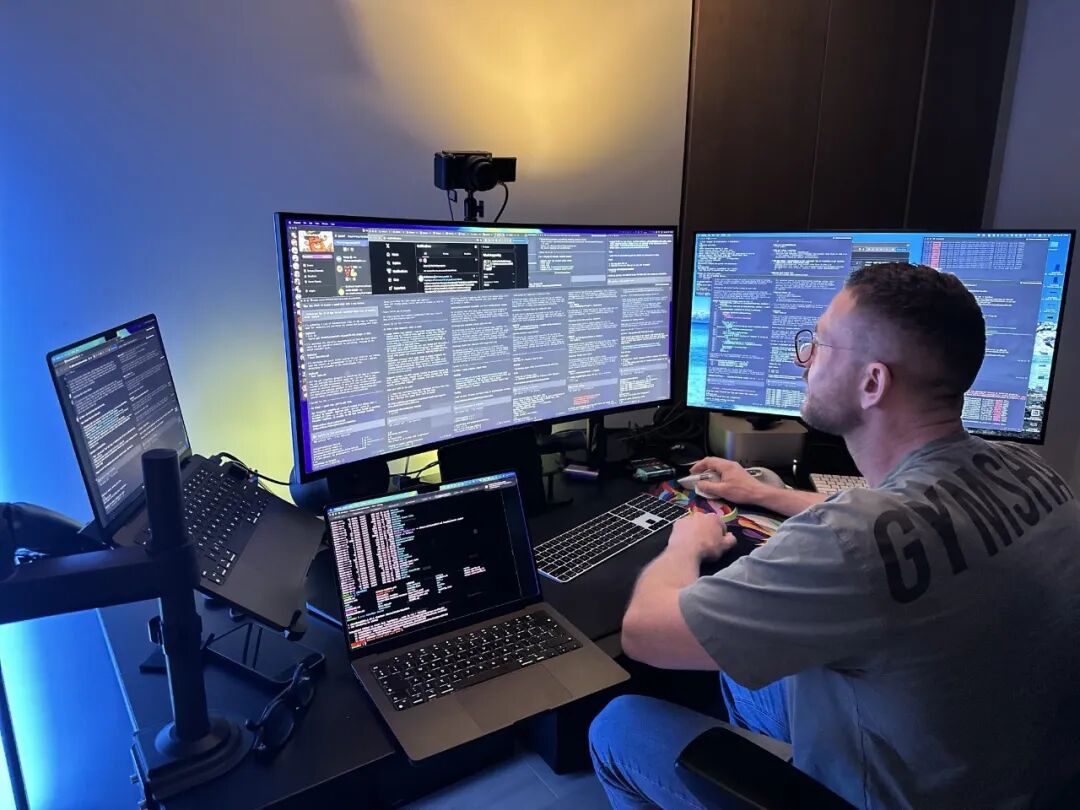
While the various AIs are working, I usually handle some work that requires manual intervention, such as revising draft papers, reviewing some key code, or chatting in WeChat groups. Then I switch to the Claude Code/Codex terminal at any time to see if there are any links or stage acceptances that require manual check. Then, based on this round of output, I continue to arrange the next round of tasks.
My way of doing things is actually managing a virtual team composed of different AIs.
This feeling makes me more and more convinced of one thing: Vibe Coding and the concept of a one-person company are a perfect match.
The concept of a one-person company is not new. Paul Jarvis wrote "Company of One" in 2019, the core idea is not to blindly pursue growth, one person can also do business very well. But to be honest, the things that one person could do were limited at that time. No matter how efficient you are, there are only 24 hours in a day, and the amount of code you can write, designs you can make, and messages you can reply to is limited.
So in the past few years, talking about one-person companies was more of a lifestyle choice, and it was not a competitive business model.
The situation in 2026 is completely different.
Sam Altman said in the Conversations with Tyler podcast at the end of last year: In the future, there will be billion-dollar companies operated by two or three people. Anthropic's CEO Dario Amodei was asked when the first solo unicorn would appear, and the answer was more direct, just one word: 2026.
The CEOs of the two top AI companies have unanimously placed their bets on the same direction. Data is also verifying this direction: In 2025, the proportion of independent founders in newly established companies worldwide soared from 23.7% in 2019 to 36.3%, more than one-third.
In fact, you don't need to look at predictions, just look at the data. Pieter Levels, a Dutch independent developer, is currently the most well-known one-person company benchmark in the world. Zero employees, according to the data he publicly disclosed on X, annual income exceeds 3 million US dollars.

His Photo AI has a monthly income of over 110,000 US dollars, and InteriorAI has a monthly income of 36,000 US dollars. Even more exaggerated is fly.pieter.com, which he made from zero to 1 million US dollars in annualized revenue in 17 days. One person, no team, no financing, no office.
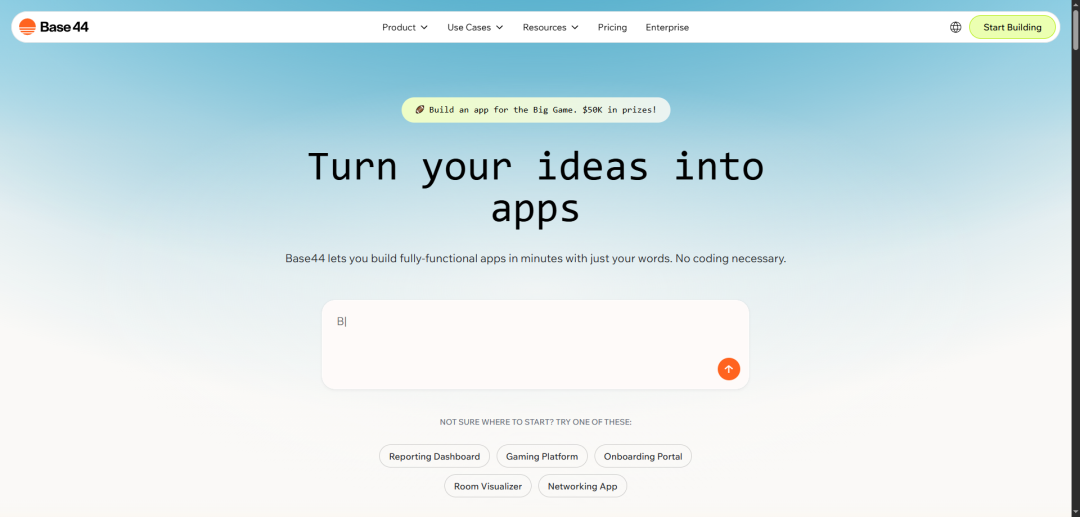
There is an even more impressive case. According to reports, Israeli developer Maor Sholomo made an AI application building platform Base44, which was acquired by Wix for 80 million US dollars only 6 months after its launch. One person, half a year, 80 million US dollars exit.
If these case numbers were told to others three years ago, they would think you were joking. But they are real things that happened.
Why has the one-person company suddenly changed from a concept to a reality?
I think the most critical variable is Vibe Coding.Simply put, Vibe Coding is using natural language to tell AI what you want, and the AI helps you write the code. This concept was proposed by Andrej Karpathy, and MIT Technology Review listed it as one of the breakthrough technologies of 2026. In the latest batch of Y Combinator startups, 95% of 25% of the codebases are AI-generated.
Vibe Coding precisely solves the most fatal bottleneck of a one-person company: the upper limit of individual output.
In the past, one-person companies could only do limited things, such as providing consulting, selling courses, and creating self-media content, which one person could handle. But if you want to create a complete SaaS product, you have to handle the front-end, back-end, database, deployment, monitoring, post-launch promotion, and after-sales service, which is simply impossible for one person.
Now it's different. In the past, creating a complete web application, including front-end, back-end, deployment, and testing, would conservatively take two to three weeks. Now, using Claude Code to run multiple sessions in parallel, a project of similar scale can be completed in three to five days. This efficiency improvement is quite considerable. According to research data from solobusinesshub, 74% of developers reported a significant increase in productivity, with prototype construction speed increasing by 3 to 5 times.
Compared to two years ago, the biggest change in my work style is the shift in roles. In the past, I was the one writing the code, but now I'm more like managing AI to write the code. Each AI session window is essentially a tireless, wage-free, 24-hour online virtual employee, a ruthless working machine. I am responsible for breaking down requirements, assigning tasks, controlling direction, and accepting output.
This is almost exactly the same as the work of a technical leader in a traditional company, except that the team members I manage are AI.
Technical Support
Anthropic recently published an engineering blog post about someone using 16 Claude Code agents in parallel to build a C compiler written in Rust. Nearly 2,000 sessions, $20,000 in API costs, and 100,000 lines of code were produced. This compiler can compile the Linux kernel. One person directed 16 AI agents and did the work of a small team for more than half a year.
Claude Opus 4.6's new Agent Teams feature allows multiple Claude instances to coordinate autonomously, review each other, and process complex codebases in parallel. In short, it productizes the management of virtual teams. I tried multi-agent collaboration myself, and it is indeed much easier than manually switching between multiple windows.
Looking at the cost side, the annual cost of a complete technology stack for a solopreneur is now between $3,000 and $12,000, which is 95% to 98% lower than that of a traditional startup. Even more exaggerated is that, according to statistics, more than 90% of one-person company entrepreneurs have less than $500 in start-up capital. My own annual spending on Claude Code Max subscriptions is probably less than $3,000, which is much cheaper than hiring a junior developer. Stripe's 2024 report shows that 44% of profitable SaaS companies are operated by solo founders, and this percentage is growing rapidly.
Vibe Coding increases the output capacity of individuals by an order of magnitude while pushing start-up and operating costs to extremely low levels. These two changes combined have transformed the one-person company from an idealistic lifestyle choice into a truly competitive business model.
Unpleasant Truths
AI can currently do well-defined, clearly bounded work, but it is still far from being able to handle vague requirements, make business judgments, or build trust with real people.
To be honest, the most difficult part of a one-person company has never been the technology.
What makes Pieter Levels so great? It's not really the code (he himself says the code is terrible), but his keen sense of market demand. Photo AI addresses a real need: professional photos are too expensive and too troublesome; fly.pieter.com also addresses a real need: flight information is too scattered. AI cannot currently help you with product judgment.
The same goes for distribution capabilities. The product is made, but how do you let people know about it? Pieter Levels has hundreds of thousands of followers on X (he himself is a super individual with his own IP), and each new product launch comes with its own traffic. A one-person company without distribution channels will have no users, no matter how good the product is.
There is also the patience for continuous iteration. AI can help you get started quickly, but the long-term competitiveness of a product comes from user feedback, word-of-mouth accumulation, and continuous polishing. AI cannot replace these things; the founder needs to do them themselves.
Threshold TransferVibe Coding seems to lower the technical threshold for entrepreneurship, but it actually places higher demands on the overall capabilities of entrepreneurs. You have to simultaneously play the roles of product manager, technical architect, marketing, customer service, and finance. Previously, these roles were distributed among the team, but now they are all on your shoulders. AI can help you execute, but you have to determine the direction.
There is also a very real challenge at the micro level: attention management.
Running 10 or so AI terminals at the same time sounds cool, but in actual operation, your brain is really tired. The context of each conversation is different, and the task progress is different. I need to quickly switch between different codebases and different problem domains. A slight distraction can lead to giving the wrong instructions to the wrong conversation, and then spending more time fixing it.
This is actually very similar to managing a real team. Good managers can follow up on seven or eight project lines at the same time, while ordinary people start dropping the ball when managing three. AI conversation management is essentially a direct reflection of project management ability.
So I have always felt that the one-person company empowered by Vibe Coding has a lower threshold on the surface, but in reality, the threshold has shifted. It has shifted from whether you can write code to whether you can control multiple lines at the same time and make correct judgments under high information density. To be honest, this ability is much more difficult than simply writing code.
Suggestions
For friends who want to try this path, my suggestion is very practical: start with a small problem that you really have a pain point with, use Vibe Coding to quickly create an MVP (Minimum Viable Product), and throw it into the market to validate it. Don't try to make a big splash or a big project right from the start. Each of Pieter Levels' successful products started with a minimalist version.
AI tools are already in place, and programming skills are no longer scarce. What is really scarce is the execution ability to take action and the judgment to find the right problems. Vibe Coding gives one person a virtual team, and the one-person company gives this team the most efficient organizational form. These two things together are a match made in heaven.